
Wisdom Teeth Removal Belconnen: What to Expect Before, During, and After
The words “wisdom teeth removal” can bring a wave of anxiety. Thoughts of pain, swelling, and days of eating mush might flood your mind. But what if you knew exactly what was going to happen every step of the way?
Knowledge is the best tool to reduce fear. At Elfar Dental in Belconnen, we believe in preparing our patients fully so you can face your procedure with confidence. This guide walks you through everything you need to know about wisdom teeth removal – from your first consultation to a smooth, comfortable recovery.
The Australian Dental Association (ADA) notes that wisdom teeth removal is a common procedure, and proper preparation and aftercare are key to optimal healing.
Two Types of Wisdom Teeth Removal
It’s important to understand that not all wisdom teeth removal is the same. The type of extraction you need depends on whether your wisdom teeth have fully erupted.
| Type | Description | Recovery |
|---|---|---|
| Simple Extraction (In-Chair) | Wisdom teeth have fully erupted through the gum and can be removed like any other tooth, using gentle techniques under local anaesthesia | Similar to any routine tooth extraction – often back to normal within a day or so |
| Surgical Extraction | Wisdom teeth are impacted (trapped beneath the gum or bone) and require a small incision to access the tooth | Longer recovery, typically 3-7 days |
Most wisdom teeth that have erupted normally can be extracted in the dental chair – healing is no different to any other tooth extraction. Surgical extraction is only needed for impacted or complex cases.
What Are Wisdom Teeth?
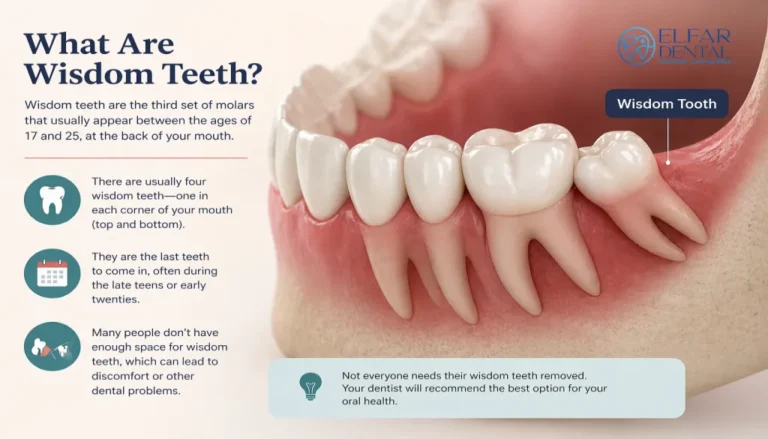
Wisdom teeth are the third and final set of molars that typically emerge between the ages of 17 and 25 . Most people have four wisdom teeth – one in each corner of the mouth – though some people have fewer, and some have none at all.
For many people, wisdom teeth can cause problems because there simply isn’t enough space in the jaw for them to emerge properly.
Why Might You Need Your Wisdom Teeth Removed?
Not everyone needs their wisdom teeth extracted. However, removal is often recommended when:
| Reason | Explanation |
|---|---|
| Impacted wisdom teeth | Teeth are trapped beneath the gum or growing at an angle (surgical extraction) |
| Crowding | Not enough space for teeth to emerge properly |
| Pain or infection | Partially erupted teeth can trap food and bacteria |
| Damage to adjacent teeth | Wisdom teeth can push against or damage neighbouring molars |
| Cyst formation | Fluid-filled sacs can develop around impacted teeth |
| Decay | Wisdom teeth are difficult to clean and prone to cavities |
| Prevention | Even without current symptoms, some patients choose removal to prevent future problems |
The ADA advises that wisdom teeth that are healthy, fully erupted, and easy to clean may not need to be removed.
The Wisdom Teeth Removal Process: Step by Step
Before Removal – Preparation is Key
1. Initial Consultation and X-rays
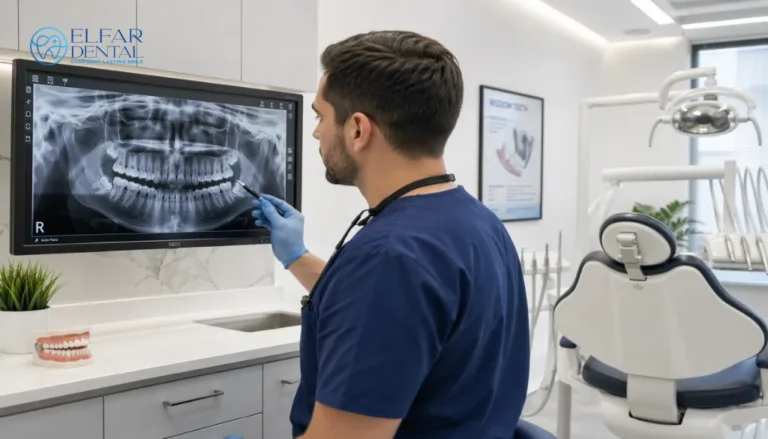
Your journey begins with a thorough examination at Elfar Dental. Dr. Mohamed Elfar will take digital X-rays or a 3D scan to assess:
The position and angle of your wisdom teeth
Whether they are impacted (trapped beneath the gum) or fully erupted
The proximity of the tooth roots to important nerves
Any signs of infection or damage to adjacent teeth
2. Discussion of Anaesthesia Options
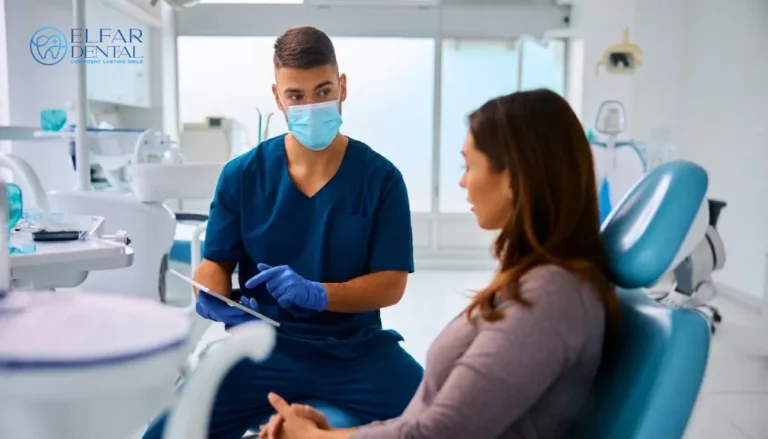
Depending on the complexity of your case and your anxiety level, we will discuss appropriate anaesthesia options:
| Option | Best For |
|---|---|
| Local anaesthesia | Simple, fully erupted extractions performed in the chair while you remain awake |
| IV sedation | Moderate anxiety or more complex cases (performed in-house) |
| General Anaesthesia (GA) at hospital | Complex surgical cases or severe anxiety (arranged with a specialist in a hospital setting) |
The ADA emphasises that appropriate pain and anxiety management is essential for patient comfort during dental procedures.
3. Pre-Operative Instructions
You will receive clear instructions before your procedure:
For in-chair simple extractions, you can usually drive yourself home
For sedation or GA, arrange for a responsible adult to drive you home and stay with you for 24 hours
Fill any prescribed medications beforehand
Stock up on soft foods (yoghurt, smoothies, soup, mashed potatoes, protein shakes)
Prepare ice packs and extra pillows (helpful for any swelling)
Do not eat or drink for the recommended time before your appointment (typically 6-8 hours for sedation or GA)
During Removal – A Comfortable, Controlled Experience
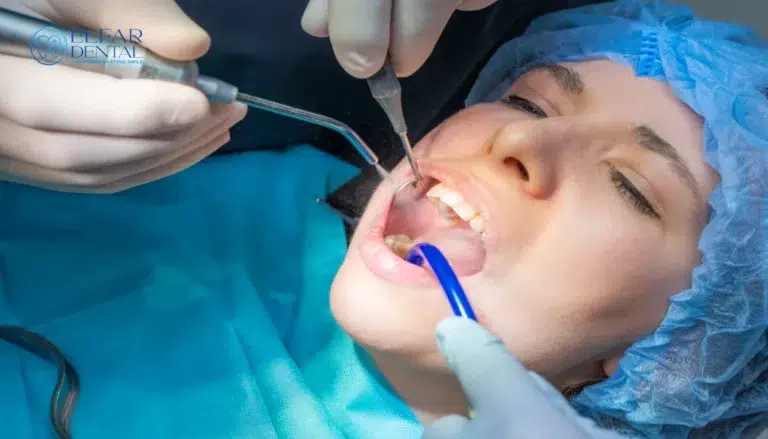
Simple In-Chair Extraction
On the day of your procedure for a fully erupted wisdom tooth:
Local anaesthesia is administered to numb the area
The tooth is gently loosened and removed using specialised instruments
Gauze is placed over the extraction site to control bleeding
The entire process is similar to having any other tooth removed
Surgical Extraction (Impacted Teeth)
If your wisdom tooth is impacted (trapped beneath the gum or bone):
Anaesthesia is administered to ensure your comfort
A small incision is made in the gum to access the tooth
Any bone covering the tooth is gently removed
The wisdom tooth is carefully extracted, often in sections if needed
The area is cleaned, and stitches may be placed if required
Gauze is placed over the extraction site to control bleeding
Most patients under sedation or GA have no memory of the surgical procedure at all.
After Removal – Your Roadmap to Recovery
Recovery depends on the type of extraction you had. For simple in-chair extractions, healing is very similar to any other tooth extraction – most patients feel back to normal within a day or so. For surgical extractions, a longer recovery period (3-7 days) is typical.
The First 24 Hours (The Critical Period for Both Types)
| Do This | Avoid This |
|---|---|
| Rest | Strenuous activity or bending over |
| Apply ice packs to your cheeks (20 mins on, 20 mins off) if swelling occurs | Using a straw (sucking action can dislodge the blood clot) |
| Bite gently on gauze as directed | Spitting or rinsing vigorously |
| Take pain medication as prescribed if needed | Smoking or using tobacco products |
| Drink cool water | Hot drinks or alcohol |
| Eat soft, cool foods (yoghurt, smoothies, soup) | Chewy, crunchy, or hard foods |
Why these rules matter: A blood clot forms in the extraction socket to protect the bone and nerve endings. Dislodging this clot leads to a painful condition called dry socket. This applies to any tooth extraction, not just wisdom teeth.
Days 2-4 (The Healing Phase)
Swelling may peak around day 2-3 for surgical cases. However, for simple in-chair extractions, many patients experience little to no swelling. If swelling occurs, switch to warm compresses after 48 hours.
Gently rinse with warm salt water (1/2 teaspoon salt in a cup of warm water) starting 24 hours after surgery. Do not swish vigorously – gently let the water move around your mouth.
Brush your teeth gently, avoiding the extraction sites.
Progress your diet as comfort allows – scrambled eggs, pasta, mashed vegetables.
Days 5-7 (Returning to Normal)
Swelling and discomfort should significantly decrease
Most patients with simple extractions return to work or school the next day. Surgical cases may require a few days of rest.
Stitches, if placed, will dissolve or be removed at a follow-up appointment (stitches are only needed for surgical cases)
Gradually resume normal eating and exercise
What Is Dry Socket? (And How to Avoid It)
Dry socket (alveolar osteitis) occurs when the blood clot in the extraction socket is dislodged or dissolves prematurely, exposing the underlying bone and nerves. It is the most common complication after any tooth extraction.
Signs of dry socket:
Severe, throbbing pain 2-4 days after extraction
Pain that radiates to your ear or neck
Visible empty-looking socket
Bad taste or breath
How to prevent dry socket:
❌ No straws for at least one week
❌ No spitting or vigorous rinsing
❌ No smoking (significantly increases risk)
❌ No sucking on lollies or anything else
If you suspect a dry socket, contact Elfar Dental immediately. Treatment is simple – your dentist will clean the socket and place a medicated dressing for relief.
The ADA notes that dry socket is a recognised complication that requires prompt dental attention.
Red Flags: When to Call Your Dentist
Contact Elfar Dental immediately if you experience:
| Symptom | Potential Concern |
|---|---|
| Severe pain not relieved by medication | Possible dry socket or infection |
| Bleeding that won’t stop with pressure | Requires assessment |
| Fever over 38°C | Possible infection |
| Pus or foul taste in your mouth | Signs of infection |
| Swelling that worsens after 3-4 days | Possible infection |
| Difficulty breathing or swallowing | Seek emergency care |
Wisdom Teeth Removal Recovery Timeline
| Timeframe | Simple Extraction (In-Chair) | Surgical Extraction (Impacted) |
|---|---|---|
| Day 1 | Rest, soft foods. Bleeding stops within a few hours | Rest, ice packs, soft foods. Bleeding may take longer |
| Day 2-3 | Most patients feel fine. Minimal swelling possible | Swelling may peak. Pain manageable with medication |
| Day 4-5 | Return to normal activities usually within 24 hours | Swelling decreases. Can return to desk work |
| Day 7 | Fully healed | Most patients feel significantly better |
| Day 10-14 | — | Almost fully healed |
Frequently Asked Questions
Q: Does wisdom teeth removal hurt?
A: During the procedure, you will be completely comfortable thanks to anaesthesia. Afterward, there is manageable discomfort which can be controlled with prescribed or over-the-counter pain medication. Most patients report less pain than they anticipated.
Q: How long does the procedure take?
A: A simple in-chair extraction takes about 10-20 minutes. Removing all four impacted wisdom teeth surgically takes about 45-90 minutes.
Q: When can I return to work or school?
A: For simple extractions, many patients return the same day or the next day. For surgical extractions, you may need 2-3 days of rest.
Q: Do I need all four wisdom teeth removed at once?
A: Many patients choose to have all four removed in a single procedure to recover once. However, your dentist may recommend removing them in stages depending on their position and your health.
Q: What if I don't have my wisdom teeth removed?
A: If your wisdom teeth are healthy, fully erupted, and easy to clean, they may not need removal. However, impacted wisdom teeth can lead to pain, infection, damage to adjacent teeth, and cysts.
Q: Is wisdom teeth removal covered by insurance?
A: Many private health funds cover a portion of wisdom teeth removal under Extras cover. For eligible children, the Child Dental Benefits Schedule (CDBS) may cover related services. Elfar Dental does not bulk bill – you pay on the day and claim a partial refund from Medicare if eligible.
Making Dental Care Affordable
Private Health Insurance
If you have Extras cover, wisdom teeth removal may be partially covered. We process claims on the spot through HICAPS.
Payment Plans
Elfar Dental offers flexible payment options including Afterpay and Humm to help spread the cost of treatment.
Your Partner in Dental Care
At Elfar Dental, Dr. Mohamed Elfar and our team are committed to providing gentle, professional wisdom teeth removal in a calm and supportive environment. Whether you need a simple in-chair extraction or a more complex surgical procedure, we take the time to explain your options, answer your questions, and ensure you are fully prepared for a smooth recovery.
Dr. Elfar brings extensive experience in both simple and surgical extractions, with a patient-centred approach focused on clear communication and optimal outcomes. He is a member of the Australian Dental Association and is committed to continuing education to provide quality care.
Our team shares this commitment – ensuring every patient receives the information, support, and treatment they need to recover comfortably.
Conclusion: Face Your Procedure with Confidence
Wisdom teeth removal – whether simple or surgical – is a common, routine procedure. For most patients whose wisdom teeth have erupted normally, extraction is no different to having any other tooth removed, with healing that is quick and straightforward.
With proper preparation, clear aftercare instructions, and a supportive dental team, you can recover smoothly and get back to your normal life.
The most important factor in a good outcome is you – following your aftercare instructions carefully, resting, and contacting us if anything concerns you.
About Our Dental Practice

Book Your Wisdom Teeth Consultation Today
If you’ve been told you need your wisdom teeth removed, or you’re experiencing pain or crowding, don’t wait.
Schedule an appointment with Dr. Mohamed Elfar, General Dentist, Registration No. DEN0000979762, at Elfar Dental in Belconnen.
Your Belconnen dentist. Discover more about our dental care services. Book a visit.
Ready to book your appointment?
📞 Call Our Family-Friendly Team at (02) 6251 9991
💻 Book online easily at Get Appointment
📍 Visit our modern clinic at 21 Benjamin Way, Suite 5F, Belconnen ACT 2617
Elfar Dental – Your partner for family dental care in Belconnen, Canberra, ACT.
Important Note:
This information is for educational purposes and should not replace professional dental advice. Always seek the advice of your dentist with any questions about your oral health.