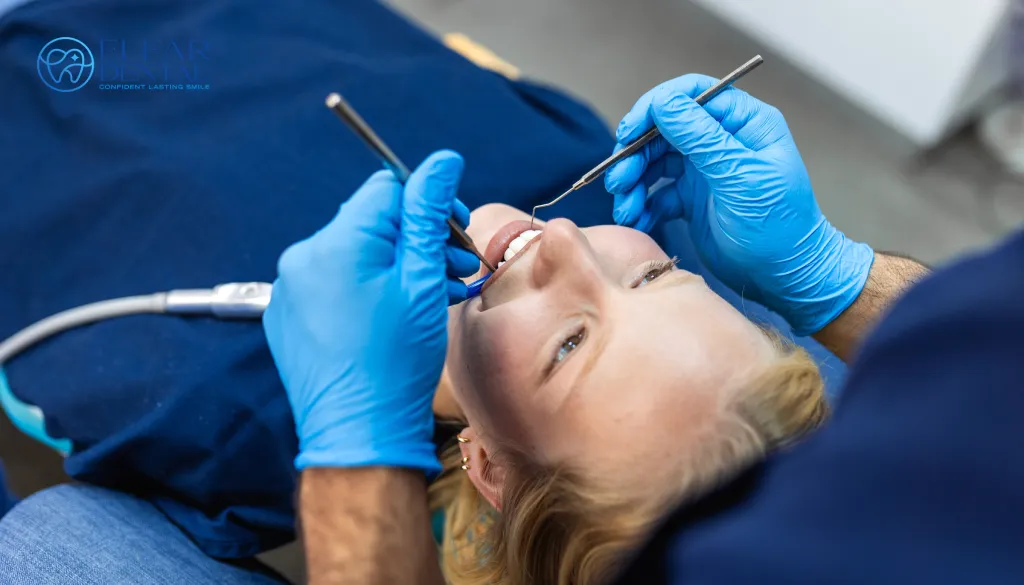
Dental Anxiety Canberra: How Modern Dentistry Can Help You Feel at Ease
For many people, the thought of visiting the dentist triggers more than mild unease—it can cause genuine fear, panic, and even avoidance of necessary dental care for years. If this sounds familiar, you are not alone.
Up to 1 in 6 Australian adults experience dental anxiety. Some feel a flutter of nervousness. Others experience full-blown panic at the thought of sitting in a dental chair. Many avoid the dentist entirely until pain forces them to seek help—often when problems have become complex and costly to treat.
At Elfar Dental in Belconnen, we believe that fear should never be a barrier to good oral health. This guide explores why dental anxiety happens, how modern dentistry has evolved to address it, and the practical strategies we use to help even the most anxious patients feel safe, respected, and in control.
The Australian Dental Association (ADA) recognises that dental anxiety is common and provides guidance on how patients can manage their fears with the help of a supportive dental team.
What Is Dental Anxiety?

Dental anxiety is a feeling of fear, nervousness, or worry specifically related to dental settings or procedures. It ranges from mild unease to severe phobia (dentophobia)—an intense, irrational fear that can cause people to avoid dental care for years.
Many people who avoid the dentist are not “overreacting.” Their fear is real, and it often stems from:
A past painful or traumatic dental experience
Fear of needles or injections
Fear of the drill or dental instruments
Feelings of helplessness or loss of control
Embarrassment about the condition of their teeth
Fear of choking or gagging
Sensitivity to sounds, smells, or tastes in a dental office
The ADA notes that acknowledging these fears is the first step toward overcoming them.
Why Avoiding the Dentist Is Risky
It’s completely understandable to want to avoid something that causes you distress. But avoiding dental care can lead to serious consequences:
| Consequence | What Happens |
|---|---|
| Small problems become big ones | A tiny cavity becomes a large filling, root canal, or extraction |
| More complex treatment | What could have been a simple filling may require surgery |
| Higher costs | More complex treatment costs significantly more |
| Pain and infection | Untreated decay can lead to abscesses and severe pain |
| Tooth loss | Advanced decay or gum disease may lead to losing teeth |
| Impact on overall health | Gum disease is linked to heart disease and diabetes |
The good news is that you don’t have to suffer in silence. Modern dentistry offers many ways to help anxious patients receive the care they need—comfortably and with dignity.
How Modern Dentistry Has Changed
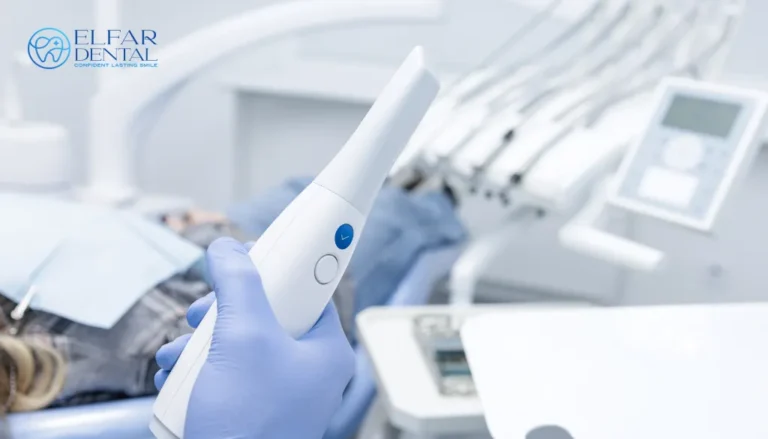
If your last dental visit was years ago, you may be surprised by how much has changed.
Then vs. Now
| Then | Now |
|---|---|
| Painful injections | Gentle, topical numbing before injections |
| Loud, scary drills | Quieter, high-speed, less invasive instruments |
| Goopy impressions | Comfortable digital scans |
| Long, unpredictable appointments | Efficient, time-respecting care |
| Limited pain management | Multiple anaesthesia and sedation options |
| “Just get through it” attitude | Patient-centred, empathy-focused approach |
Modern dentistry prioritises your comfort. Your dentist wants you to feel safe, informed, and in control.
Strategies to Manage Dental Anxiety at Elfar Dental
At Elfar Dental, Dr. Mohamed Elfar and our team are committed to creating a calm, supportive environment for every patient. Here are the specific ways we help anxious patients feel at ease.
1. Open Communication – Your Voice Matters
We believe that informed patients are less anxious patients. Before any treatment, we take time to:
Listen to your concerns without judgment
Explain exactly what will happen using simple, clear language
Answer every question – no matter how small
Discuss all options so you can make informed decisions
You are never “being difficult” by asking questions. You are being a responsible partner in your health.
2. Establishing a Stop Signal
Feeling trapped or out of control is a major trigger for dental anxiety. We address this by establishing a stop signal – a simple hand raise that tells us to pause immediately.
Knowing you can stop the procedure at any time gives you back a sense of control. And we will stop – no questions asked.
3. Gentle Anaesthesia Techniques
Fear of needles is one of the most common dental fears. We use several techniques to make injections more comfortable:
Topical numbing gel applied to the gum before any injection
Slow, gentle injection technique
Distraction techniques during administration
Most patients are surprised at how comfortable the process can be.
4. Comfort Amenities
We offer a range of comfort options to help you relax:
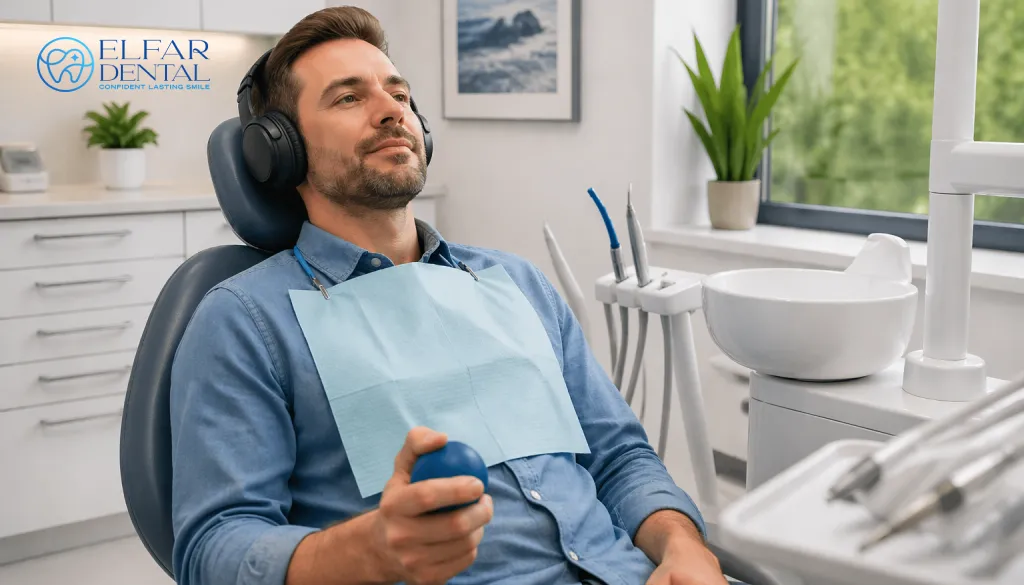
Music or podcasts – you are welcome to bring your own headphones or earbuds to listen during your appointment
Warm blankets for comfort
Stress balls to release tension
Dark glasses to block bright lights
TV on the ceiling with your choice of show
You are welcome to bring anything that helps you feel calm – a favourite jumper, your phone, or a support person.
5. Distraction Techniques
Distraction is a powerful tool for managing anxiety. During your appointment, you might choose to:
Focus on a TV show or movie
Listen to music or an audiobook (using your own headphones)
Practice deep breathing exercises
Focus on a specific spot on the ceiling
Hold a stress ball or squeeze a soft toy
Our team is trained to help guide you through these techniques if you wish.
6. Sedation Options for Moderate to Severe Anxiety
For patients with more significant anxiety, or for those undergoing longer procedures, we offer several sedation options.
| Sedation Option | What It Does | Best For |
|---|---|---|
Penthrox (green whistle) | Self-administered inhalational analgesic for pain relief and anxiety reduction | Mild to moderate anxiety |
| IV sedation | Administered intravenously by a specialist; you remain conscious but deeply relaxed | Moderate to severe anxiety |
| General Anaesthesia (GA) at hospital | Fully unconscious; treatment performed in a hospital setting | Complex procedures or severe phobia |
Your dentist will discuss which option, if any, is appropriate for your medical history and treatment needs. These services are provided by qualified specialists in appropriate clinical settings.
The ADA supports the use of sedation for anxious patients when appropriate, noting it can make dental visits more comfortable.
7. Longer Appointments, Slower Pace
For anxious patients, we never rush. We book longer appointment times so we can:
Proceed at a pace you’re comfortable with
Take breaks whenever needed
Explain each step before it happens
You are in control of the pace.
8. Breaking Treatment into Smaller Steps
Complex treatment can feel overwhelming. We can break it down into smaller, more manageable stages. For example:
Visit 1: Just a chat and a look – no treatment
Visit 2: A gentle clean
Visit 3: The first small filling
This gradual approach builds trust and confidence over time.
Tips for Managing Dental Anxiety at Home
You can also take steps before your appointment to reduce anxiety:
| Tip | Why It Helps |
|---|---|
| Choose a morning appointment | Less time to worry during the day |
| Avoid caffeine | Caffeine can increase anxiety |
| Bring a support person | A trusted friend or family member can be calming |
| Practice deep breathing | Slows heart rate and reduces tension |
| Write down your questions | So you don’t forget to ask |
| Plan a reward afterward | Something to look forward to |
| Be honest with your dentist | Tell us you’re anxious – we’re here to help |
The ADA recommends being open with your dentist about your fears so they can tailor their approach to your needs.
What If I Haven't Been to the Dentist in Years?
This is one of the most common situations we see – and there is absolutely no judgment.
Many patients avoid the dentist for years due to fear, shame, or simply life getting in the way. When they finally come in, they often say:
“I’m so embarrassed about my teeth.”
“I know I should have come sooner.”
“Please don’t judge me.”
Here’s our promise: We will never judge you. Our focus is on your future health, not your past. We will meet you where you are and work with you to create a plan that feels manageable.
The ADA encourages patients who have avoided the dentist to return – emphasising that dental professionals are there to help, not to criticise.

Frequently Asked Questions
Q: Will my dentist be annoyed if I'm anxious?
A: Absolutely not. Dental anxiety is common, and experienced dentists are trained to help anxious patients. We want you to feel safe and respected.
Q: Can I bring someone with me?
A: Yes. You are welcome to bring a support person to your appointment.
Q: What if I need to stop during the procedure?
A: We use a stop signal (raising your hand). You are in control.
Q: What sedation options do you offer?
A: A: At Elfar Dental, we offer Penthrox (green whistle) for mild to moderate anxiety, and we can arrange IV sedation or General Anaesthesia (GA) at hospital for patients with more significant anxiety or complex treatment needs. Your dentist will discuss the most appropriate option based on your medical history and the type of treatment required.
Q: How do I start?
A: Simply book a consultation. You don’t have to commit to any treatment. Just come in for a chat and let us show you that dental visits can be different.
Your Partner in Overcoming Dental Fear
At Elfar Dental, Dr. Mohamed Elfar and our team are committed to providing compassionate, patient-centred care for every Canberra patient – especially those who feel anxious.
Dr. Elfar takes the time to listen, explain, and work at your pace. He is a member of the Australian Dental Association and is committed to continuing education, including training in managing anxious patients.
Our goal is not just to treat your teeth – it’s to help you build a trusting relationship with dental care that lasts a long time.
Conclusion: You Can Feel at Ease
Dental anxiety is real, common, and nothing to be ashamed of. But it doesn’t have to control your life or your oral health.
Modern dentistry offers more ways than ever to help anxious patients feel comfortable, respected, and in control. With open communication, gentle techniques, comfort amenities, and sedation options, there is a path forward for everyone.
The hardest step is often the first one – picking up the phone.
Book Your Anxiety-Friendly Consultation Today
You don’t have to commit to treatment. Just come in for a chat. Meet our team. See our practice. Ask your questions. There is no pressure, no judgment – just a genuine desire to help.
Schedule an appointment with Dr. Mohamed Elfar, General Dentist, Registration No. DEN0000979762, at Elfar Dental in Belconnen.
About Our Dental Practice

Your Belconnen dentist. Discover more about our dental care services. Book a visit.
Ready to book your appointment?
📞 Call Our Family-Friendly Team at (02) 6251 9991
💻 Book online easily at Get Appointment
📍 Visit our modern clinic at 21 Benjamin Way, Suite 5F, Belconnen ACT 2617
Elfar Dental – Your partner for family dental care in Belconnen, Canberra, ACT.
Important Note:
This information is for educational purposes and should not replace professional dental advice. Always seek the advice of your dentist with any questions about your oral health. If you have severe dental phobia, speak with your dentist about appropriate management options.