
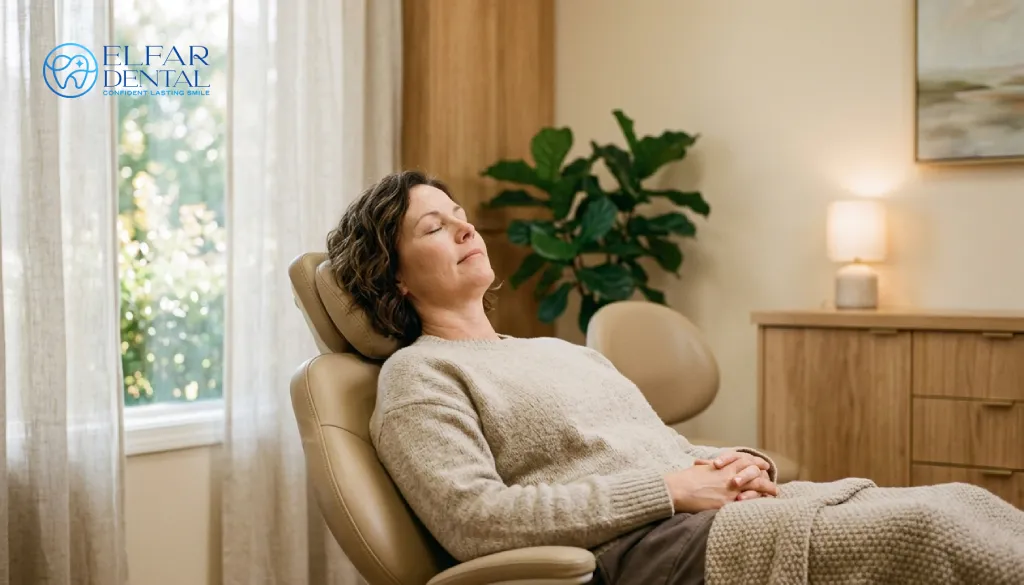
Sedation Dentistry Canberra: Options for Anxious Patients
For many people, the thought of visiting the dentist triggers more than mild unease. It can cause genuine fear, panic, and even avoidance of necessary dental care for years. If this sounds familiar, you are not alone.
Up to 1 in 6 Australian adults experience dental anxiety. Some feel a flutter of nervousness. Others experience full-blown panic at the thought of sitting in a dental chair. Many avoid the dentist entirely until pain forces them to seek help – often when problems have become complex and costly to treat.
At Elfar Dental in Belconnen, we believe that fear should never be a barrier to good oral health. For patients who need additional support to receive dental care, understanding your anaesthetic and sedation options is the first step toward a more comfortable experience.
This guide explains the options available and what you should consider when discussing anaesthesia with your dentist.
The Australian Dental Association (ADA) recognises that dental anxiety is common and supports the use of appropriate sedation techniques to help patients receive necessary dental care.
Understanding Your Anaesthetic Options at Elfar Dental
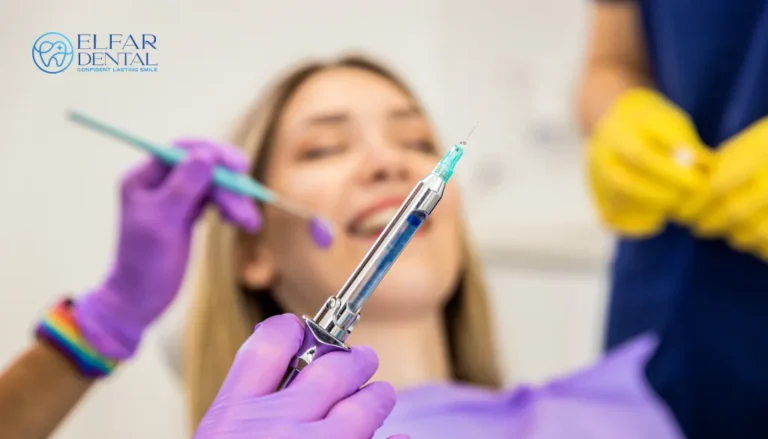
Not all dental procedures feel the same – and neither do the ways we keep you comfortable. Here is a simple breakdown of the options we offer.
💠 Local Anaesthetic (LA)
Feature | Description |
What it does | Numbs a specific area of your mouth while you stay fully awake |
Ideal for | |
What you feel | Depending on the type of treatment, you feel pressure, but no pain |
Recovery | Fast recovery – you can drive home |
Local anaesthetic is the most common form of pain control in dentistry. The area is numbed using an injection after applying a topical numbing gel to the gum. You remain fully awake and aware throughout the procedure but should feel no pain.
💠 IV Sedation (Sleep Dentistry)
|
Feature |
Description |
|
What it does |
A calming, dream-like state delivered through a small IV line |
|
Ideal for |
Anxious patients, wisdom teeth removal, longer procedures |
|
What you feel |
You remain conscious but deeply relaxed and often remember very little |
|
Recovery |
Must have someone drive you home |
IV sedation is administered by a specialist while you are in our clinic. You will be monitored throughout the procedure. Most patients feel very relaxed and may have little or no memory of the treatment afterward.
Important: You will need a responsible adult to drive you home and stay with you for 24 hours after IV sedation.
💠 General Anaesthetic (GA)
|
Feature |
Description |
|
What it does |
You are fully asleep in a hospital setting with a specialist anaesthetist |
|
Ideal for |
Complex surgeries, severe anxiety, multiple procedures at once |
|
What you feel |
Zero awareness during treatment |
|
Recovery |
Requires hospital admission and full recovery time |
General anaesthesia is typically reserved for more complex cases or patients with severe dental phobia. The procedure is performed in a hospital setting with a specialist anaesthetist. You will be completely unconscious and unaware of the treatment.
Important: You will need a responsible adult to drive you home and stay with you for 24 hours after general anaesthetic.
Comparison of Options at a Glance
|
Feature |
Local Anaesthetic |
IV Sedation |
General Anaesthetic |
|
Awareness |
Fully awake |
Conscious but deeply relaxed |
Fully asleep |
|
Awareness of procedure |
Aware |
Little to no memory |
No memory |
|
Can drive home? |
Yes |
No |
No |
|
Setting |
Dental chair |
Dental chair |
Hospital |
|
Best for |
Fillings, simple extractions |
Anxious patients, longer procedures |
Complex surgery, severe phobia |
At Elfar Dental: Your Comfort Is Our Priority
Your comfort is our priority. Our team will help you choose the safest and most suitable option based on your treatment and personal needs.
Before any procedure, your dentist will discuss:
- The type of procedure and its expected duration
- Your level of dental anxiety or fear
- Your medical history and any medications you take
Your preferences and concerns
Together, you will decide on the most appropriate approach for your situation.
The ADA advises that appropriate training, facilities, and monitoring are essential for safe sedation practice.
- Temporary veneer removal: If temporary veneers were placed, they are gently removed.
- Try-in: Your dentist will place the permanent veneers temporarily to check fit, colour, and appearance. This is your opportunity to provide feedback.
- Bonding: Once you are satisfied, each veneer is permanently bonded to your tooth using a specialised dental adhesive and cured with a special light.
- Final adjustments: Your dentist will check your bite and make any final adjustments for comfort.
Frequently Asked Questions

Q: Is sedation dentistry safe?
A: When administered by trained professionals in appropriate clinical settings, sedation is very safe. Your medical history will be reviewed to ensure it is appropriate for you.
Q: Will I be completely unconscious?
A: For local anaesthetic, you are fully awake. For IV sedation, you remain conscious but deeply relaxed. For general anaesthetic, you are completely unconscious.
Q: Will I remember anything?
A: With local anaesthetic, you will remember the procedure. With IV sedation, many patients remember little or nothing. With general anaesthetic, you will remember nothing.
Q: Can I eat before my appointment?
A: For local anaesthetic, you can usually eat normally. For IV sedation or general anaesthetic, you will typically need to fast for 6-8 hours. You will receive clear instructions before your appointment.
Q: How do I prepare for a sedation appointment?
A: Arrange transport, follow fasting instructions, bring a list of your current medications, and wear comfortable clothing.
Q: Is sedation covered by insurance?
A: Coverage varies by health fund and policy. We recommend checking with your insurer. We process claims on the spot through HICAPS.
Making Dental Care Affordable
Private Health Insurance
If you have Extras cover, a portion of sedation costs may be covered. We process claims on the spot through HICAPS.
Payment Plans
Elfar Dental offers flexible payment options including Afterpay and Humm to help spread the cost of treatment.
Your Partner in Comfortable Dentistry
At Elfar Dental, Dr. Mohamed Elfar and our team understand that dental anxiety is real and can be overwhelming. We are committed to providing compassionate care for every patient – especially those who feel anxious.
We take the time to listen, explain all options, and work at a pace that feels right for you. If you are interested in exploring whether sedation is appropriate for your situation, we invite you for a no-obligation discussion.
Conclusion: You Don't Have to Suffer in Silence
Dental anxiety can have a significant impact on your oral health and overall wellbeing. Avoiding the dentist allows small problems to become larger, more complex, and more costly to treat.
Understanding your anaesthetic and sedation options may help you feel more in control. For many patients, sedation offers a safe and effective pathway to receiving the care they need – in comfort and without fear.
The first step is a conversation.
About Our Dental Practice

Book Your Consultation Today
If you’ve been avoiding the dentist due to fear or anxiety, we invite you to reach out. There is no judgment – only a genuine desire to help.
Schedule an appointment with Dr. Mohamed Elfar, General Dentist, Registration No. DEN0000979762, at Elfar Dental in Belconnen, Canberra.
Your Belconnen dentist. Discover more about our dental care services. Book a visit.
Ready to book your appointment?
📞 Call Our Family-Friendly Team at (02) 6251 9991
💻 Book online easily at Get Appointment
📍 Visit our modern clinic at 21 Benjamin Way, Suite 5F, Belconnen ACT 2617
Elfar Dental – Your partner for family dental care in Belconnen, Canberra, ACT.
Important Note:
This information is for educational purposes and should not replace professional dental advice. Every patient’s situation is unique, and treatment decisions – including the use of sedation – should be made in partnership with qualified dental professionals.