Cracked Tooth Syndrome: The Hidden Fracture That Causes Mysterious Pain
You’re eating, and suddenly—a sharp, fleeting pain. You wince, pause, and then it’s gone. Days or weeks later, it happens again. Your tooth looks perfectly fine in the mirror. There’s no visible chip, no obvious cavity. So what’s causing this mysterious, intermittent pain?
You may be experiencing cracked tooth syndrome (CTS) —one of dentistry’s most challenging diagnostic puzzles and a surprisingly common condition.
At Elfar Dental, we understand how frustrating it can be to experience pain without a clear cause. This comprehensive guide will help you understand cracked tooth syndrome, recognise its subtle signs, and know what treatment options are available to save your tooth and restore your comfort.
What Is Cracked Tooth Syndrome?
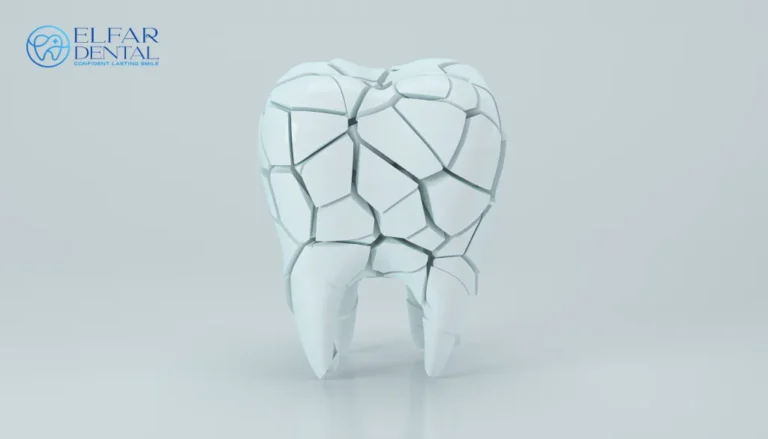
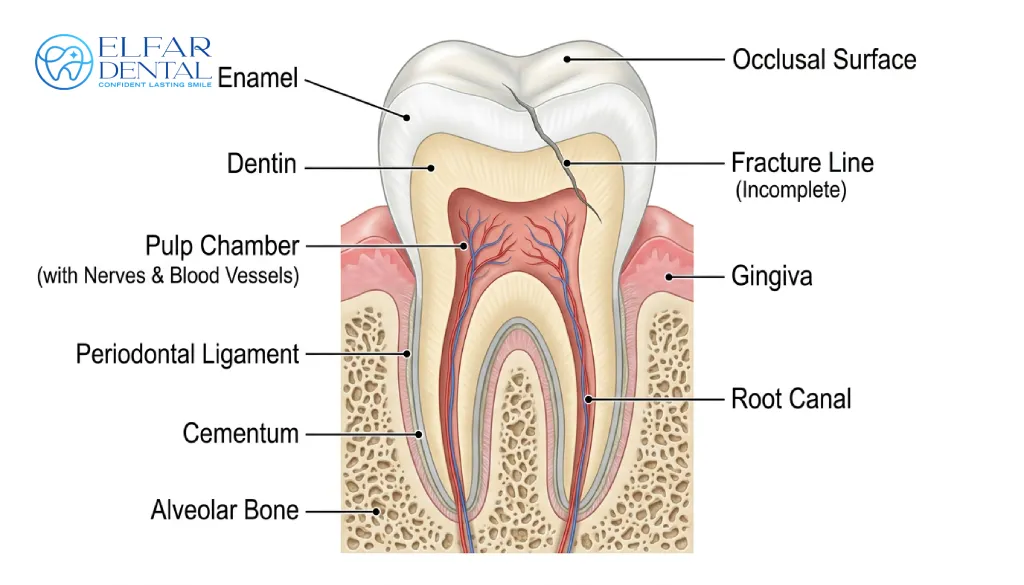
Cracked tooth syndrome is defined as an incomplete fracture of a tooth that extends from the chewing surface (the crown) downward, sometimes progressing toward the root . Importantly, the crack is not yet complete—the tooth hasn’t split into separate pieces—which is why it can be so difficult to detect.
The term “syndrome” is apt because, as dental research confirms, cracked teeth do not present with a set of classical symptoms . This variability makes diagnosis challenging even for experienced dental professionals.
How Common Is Cracked Tooth Syndrome?
Cracked teeth are increasingly prevalent in modern dental practice . Several factors contribute to this rise:
Ageing population retaining more teeth: People are keeping their natural teeth longer than previous generations
Heavily restored dentition: Teeth with large fillings are more susceptible to cracking
Increased stress and bruxism: The pressures of modern life lead to more clenching and grinding
- Modern dietary patterns: Changes in eating habits affect tooth structure over time
Research indicates that cracked tooth syndrome is most common in individuals aged 45 to 60 years, and mandibular molars (lower back teeth) are most frequently affected.
The Diagnostic Challenge: Why Cracked Teeth Are Hard to Spot
The difficulty in diagnosing cracked tooth syndrome stems from several factors:
| Challenge | Why It Matters |
|---|---|
| Invisible on X-rays | Most cracks are too fine to appear on standard dental radiographs |
| Intermittent symptoms | Pain comes and goes, often absent during dental examinations |
| Tooth looks normal | No visible damage to the naked eye |
| Symptoms mimic other conditions | Can be mistaken for sinus issues, headaches, or TMJ disorders |
| Crack progression varies | Some cracks remain stable; others worsen over time |
The National Dental Practice-Based Research Network found that only 12% of cracks showed progression over three years, meaning many cracked teeth remain stable with appropriate monitoring and care
Signs and Symptoms of Cracked Tooth Syndrome
The symptoms of cracked tooth syndrome are distinctive—once you know what to look for.
The Classic Presentation
| Symptom | Description |
|---|---|
| Pain on biting | Sharp pain when chewing, especially when releasing pressure |
| Temperature sensitivity | Brief discomfort to cold or, less commonly, hot stimuli |
| Intermittent symptoms | Pain comes and goes; may disappear for days or weeks |
| Difficulty localising pain | Patients often can’t identify which tooth hurts |
The "Rebound Pain" Sign
A hallmark of cracked tooth syndrome is pain upon release of biting pressure . When you bite down, the crack opens slightly. When you release, the crack closes rapidly, stimulating the nerve and causing a sharp, momentary pain. This differs from decay-related pain, which typically hurts during biting rather than upon release.
Symptoms by Crack Severity
| Crack Type | Typical Symptoms |
|---|---|
| Minor crack (craze line) | Usually no symptoms; affects enamel only |
| Crack into dentin | Sharp pain on biting; sensitivity to cold |
| Crack approaching pulp | More frequent pain; possible lingering sensitivity |
| Crack involving pulp | Spontaneous pain, prolonged sensitivity, possible infection |
Types of Tooth Fractures
Understanding the different types of cracks helps clarify treatment options and prognosis.
1. Craze Lines (Minor Cracks)
These are superficial cracks affecting only the enamel (the outer tooth surface). They are very common, especially in adult teeth, and rarely require treatment . Your dentist may lightly polish them for aesthetics if desired.
2. Cracked Tooth (True Cracked Tooth Syndrome)
This involves a crack extending from the chewing surface downward, potentially toward the nerve . The tooth pieces remain in place, but the crack may gradually spread. Treatment typically involves a crown to protect the tooth and prevent crack progression.
3. Split Tooth
A split tooth occurs when a crack has completely separated the tooth into distinct segments . In some cases, if one root segment is healthy, a portion of the tooth may be saved with root canal treatment and a crown. Often, however, extraction is necessary.
4. Vertical Root Fracture
These cracks begin in the root and extend upward toward the chewing surface . They often cause infection and pain in the surrounding bone and gum. Most vertical root fractures require tooth extraction.
5. Broken Cusp
A fracture affecting the pointed chewing surface (cusp) of a tooth . These typically do not involve the nerve and are often restorable with a crown or onlay.
6. Decay-Induced Fracture
The tooth breaks because a cavity has weakened it from the inside out . Treatment depends on the extent of decay, ranging from a large filling or crown to extraction in severe cases.
What Causes Teeth to Crack?
Risk Factors
| Factor | Description |
|---|---|
| Bruxism (teeth grinding) | Excessive forces from clenching or grinding |
| Large fillings | Weaken the remaining tooth structure |
| Malocclusion | Uneven bite forces on certain teeth |
| Trauma | Sports injuries, accidents, or biting hard objects |
| Temperature extremes | Rapid changes from hot to cold foods |
| Aging | Teeth become more brittle over time |
| Parafunctional habits | Chewing ice, pens, or fingernails |
The Role of Bruxism
Bruxism is a common outcome due to the ever-increasing stresses of a fast-paced life, contributing significantly to crack formation . Many people clench or grind their teeth during sleep without realising it, placing tremendous force on their teeth night after night.
How Cracked Tooth Syndrome Is Diagnosed
Because cracks are often invisible on X-rays, dentists rely on a combination of approaches.
1. Detailed History Taking
Your dentist will ask about:
The nature and timing of your pain
Whether pain occurs on biting or release
Any history of grinding or clenching
Recent trauma or dietary changes
2. Clinical Examination
| Diagnostic Tool | Purpose |
|---|---|
| Bite tests | Using a special tool (tooth slooth) to identify which tooth hurts when biting |
| Transillumination | Shining a bright light through the tooth—cracks block light transmission |
| Staining | Applying dyes that penetrate cracks, making them visible |
| Magnification | Using loupes or microscopes to detect fine crack lines |
| Periodontal probing | Checking for isolated deep pockets that may indicate a crack extending to the root |
3. Radiographic Examination
While standard X-rays rarely show cracks, they are essential to:
Rule out other causes of pain (decay, infection)
Assess bone levels around the tooth
Check for signs of crack extension (widening of the periodontal ligament space)
In some cases, 3D imaging (CBCT) may help evaluate suspected cracks
Treatment Options for Cracked Tooth Syndrome
Treatment depends on the crack’s location, extent, and whether the nerve is involved.
Treatment Decision Tree
| Crack Type | Typical Treatment |
|---|---|
| Minor craze lines | Monitoring only; no treatment needed |
| Crack into dentin, vital pulp | Full-coverage crown |
| Crack approaching pulp | Crown; possible root canal if symptoms develop |
| Crack involving pulp | Root canal treatment + crown |
| Split tooth | May require extraction; partial preservation possible in some cases |
| Vertical root fracture | Usually extraction |
1. Monitoring Without Restorative Treatment
For cracked teeth with vital dental pulp, monitoring without restorative treatment shows a success rate of 80% at three years . This approach is appropriate for:
Minor cracks without symptoms
Patients who understand the need for follow-up
Cracks deemed stable after assessment
2. Direct Restorations
For some cracks, a filling material (composite resin) may repair the damage . However, research indicates that full crowns do not show superior results to direct restorations for cracked teeth with vital pulp at one and three years . Treatment decisions are individualised based on the specific clinical situation.
3. Full Coverage Crowns
A crown (cap) covers the entire visible portion of the tooth, holding it together and preventing the crack from spreading . This is the most common treatment for cracked teeth with vital pulp . The National Dental Practice-Based Research Network found that the main treatment chosen for cracked teeth is a complete crow.
4. Root Canal Treatment
If the crack extends to the pulp (nerve), a root canal for cracked tooth syndrome is necessary to remove the infected or inflamed tissue and relieve pain. Following root canal treatment, a crown is essential to protect the tooth and ensure its long-term survival.
Research shows that cracked teeth that underwent root canal treatment without full-crown restorations had an 11.3-fold higher risk of tooth extraction than those with full-crown restoration.
5. Extraction
When a crack extends too far (split tooth, vertical root fracture) or when the tooth cannot be restored, extraction may be the only option . Your dentist will discuss replacement options (implant, bridge, or partial denture) if extraction is necessary.
Survival Rates: What the Research Shows
Understanding prognosis helps patients make informed decisions.
| Tooth Type | Survival Rate | Time Period |
|---|---|---|
| Cracked teeth with vital pulp | 97.8% → 92.8% | 1 → 6 years |
| Pulp survival (vital teeth) | 92.0% → 85.6% | 1 → 6 years |
| Endodontically treated cracked teeth | 91.1% → 83.0% | 1 → 4 years |
| Endodontically treated (general) | 75.8% → 100% | Range across studies |
Key Findings
Cracked teeth have a high survival rate if diagnosed and managed appropriately
Cracked teeth that underwent root canal treatment had slightly lower survival than teeth with vital dental pulp
Full crown coverage of root canal-treated cracked teeth is crucial for their survival
The National Dental Practice-Based Research Network found that only 3% of cracked teeth fractured completely over three years, and only 12% showed crack progression . This means most cracked teeth remain stable with appropriate care.
Prevention: Protecting Your Teeth from Cracks
Preventive strategies are essential in modern dentistry.
1. Address Bruxism
If you grind or clench your teeth:
Custom night guard: A professionally fitted occlusal splint protects teeth from grinding forces
Stress management: Techniques to reduce daytime clenching
Bite adjustment: In some cases, occlusal equilibration may help
2. Protect Large Restorations
Teeth with large fillings are more vulnerable. Your dentist may recommend:
Cusp coverage (onlay or crown) for weakened teeth
Regular monitoring of heavily restored teeth
3. Avoid Harmful Habits
Don’t chew ice, hard lollies, or pens
Cut food into smaller pieces
Avoid using teeth as tools
4. Maintain Regular Dental Visits
Regular check-ups allow early detection of:
Crack lines before they cause symptoms
Wear patterns indicating bruxism
Decay that could weaken teeth
5. Dietary Considerations
Limit acidic foods and drinks that can weaken enamel
Avoid rapid temperature changes (hot coffee followed by cold water)
When to See a Dentist
You should schedule a dental evaluation if you experience:
Intermittent sharp pain when chewing (especially on release)
Sensitivity to cold that comes and goes
Unexplained tooth discomfort that disappears and returns
Pain that you can’t localise to a specific tooth
History of grinding or clenching with any of the above symptoms
- You want to understand if a root canal for cracked tooth syndrome is the right solution for your pain.
The earlier cracked tooth syndrome is diagnosed, the more treatment options are available and the better the prognosis.
What to Expect at Your Elfar Dental Appointment
If you suspect a cracked tooth, here’s what will happen during your visit:
Comprehensive history: We’ll discuss your symptoms, their pattern, and any relevant habits or history
Clinical examination: Including bite tests, transillumination, and periodontal assessment
Diagnostic testing: Using multiple methods to identify the culprit tooth
Radiographs: To rule out other causes and assess bone health
Treatment discussion: Based on findings, we’ll explain all options—from monitoring to restoration
Personalised plan: Created collaboratively with your input and goals
Frequently Asked Questions (FAQ)
Q: Can a cracked tooth heal on its own?
A: No. Unlike bone, tooth enamel and dentin cannot regenerate or heal. A crack is permanent. However, not all cracks progress, and many can be managed with appropriate treatment or monitoring.
Q: Will I definitely need a root canal?
A: Not necessarily. If the crack hasn’t reached the pulp (nerve), a crown may be sufficient without root canal treatment . If the pulp becomes involved, root canal treatment will be needed.
Q: When is a root canal needed for cracked tooth syndrome?
A: A root canal for cracked tooth syndrome becomes necessary when the crack extends deep enough to reach or irritate the tooth’s nerve (pulp). This typically causes more constant or severe symptoms, such as spontaneous pain, prolonged sensitivity to hot or cold, or pain that lingers after biting. If the pulp becomes infected or inflamed, root canal treatment is the only way to save the tooth. This procedure removes the damaged nerve tissue, alleviates the pain, and allows the tooth to be restored with a crown for long-term protection.
Q: How long will my tooth last after treatment?
A: With appropriate treatment, cracked teeth have excellent survival rates—over 90% at 5 years for many cases . Prognosis depends on crack depth, treatment timing, and ongoing care.
Q: Is cracked tooth syndrome an emergency?
A: It’s not typically a “middle of the night” emergency, but you should schedule an appointment promptly. Early diagnosis offers more conservative treatment options.
Q: Can I wait and see if it gets better?
A: Waiting carries risk. Cracks can progress, potentially leading to more complex treatment (root canal) or tooth loss. Earlier intervention is usually simpler and more conservative.
Q: Will I need a crown?
A: Often, yes. A crown is the most common treatment for cracked teeth, protecting the tooth and preventing crack progression . However, some cracks may be managed with direct restorations or monitoring.
The Elfar Dental Approach
At Elfar Dental, we align our care with evidence-based guidelines and the Australian Dental Association’s recommendations. This means:
Thorough assessment: Using multiple diagnostic tools to identify elusive cracks
Collaborative care: Working with you to understand your symptoms and concerns
Conservative first: Exploring monitoring and minimally invasive options when appropriate
Informed consent: Explaining all options, risks, and benefits so you can make confident decisions
Comprehensive treatment: Providing everything from crowns to root canal therapy under one roof
Our goal is to preserve your natural tooth whenever possible and restore your comfort and function.
Conclusion: Don't Ignore Mysterious Tooth Pain
Cracked tooth syndrome is a genuine and treatable condition—not a mystery you have to live with. If you experience sharp, fleeting pain when chewing, especially upon release, your tooth may be trying to tell you something important.
With modern diagnostic techniques and a range of effective treatments, most cracked teeth can be saved and can function well for many years
About Our Dental Practice

Ready to Solve the Mystery of Your Tooth Pain?
Don’t let intermittent pain disrupt your life. Our experienced team at Elfar Dental can help identify the cause and recommend the most appropriate treatment for your situation.
Schedule a consultation with Dr. Mohamed Elfar, General Dentist, Registration No. DEN0000979762, at Elfar Dental.
Your Belconnen dentist. Discover more about our dental care services. Book a visit.
Ready to book your appointment?
📞 Call Our Family-Friendly Team at (02) 6251 9991
💻 Book online easily at Get Appointment
📍 Visit our modern clinic at 21 Benjamin Way, Suite 5F, Belconnen ACT 2617
Elfar Dental – Your partner for family dental care in Belconnen, Canberra, ACT.
Important Note:
This information is for educational purposes and should not replace professional dental advice. Every patient’s situation is unique, and treatment decisions should be made in partnership with qualified dental professionals. Always seek the advice of your dentist with any questions about your oral health. If you have severe dental phobia, speak with your dentist about appropriate management options.