
Dental Implants Belconnen: Your Guide to Replacing Missing Teeth
Losing a tooth can feel like a setback—for your smile, your confidence, and your quality of life. Whether it’s due to decay, injury, or gum disease, that gap can affect more than just your appearance. Over time, missing teeth can lead to bone loss, shifting of neighbouring teeth, and even changes to your facial structure.
The good news? Modern dentistry offers an excellent, long-lasting solution: dental implants. At Elfar Dental in Belconnen, Dr. Mohamed Elfar and our team are committed to helping Canberra patients restore their smiles with this tooth replacement option.
This comprehensive guide will walk you through everything you need to know about dental implants—from what they are and how they work, to the procedure, costs, and aftercare.
What Is a Dental Implant?
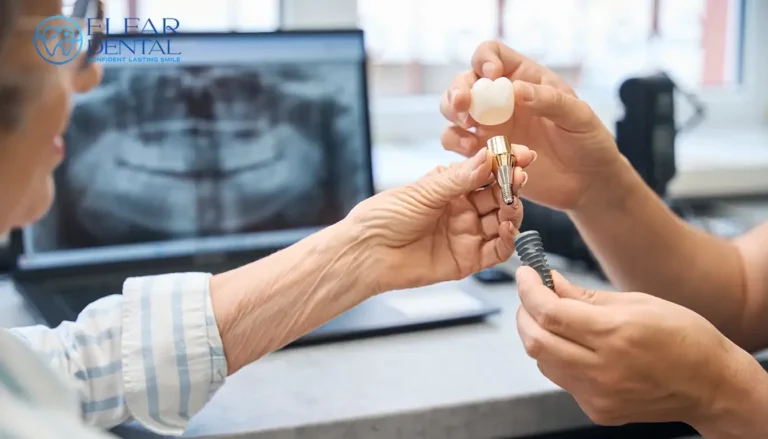
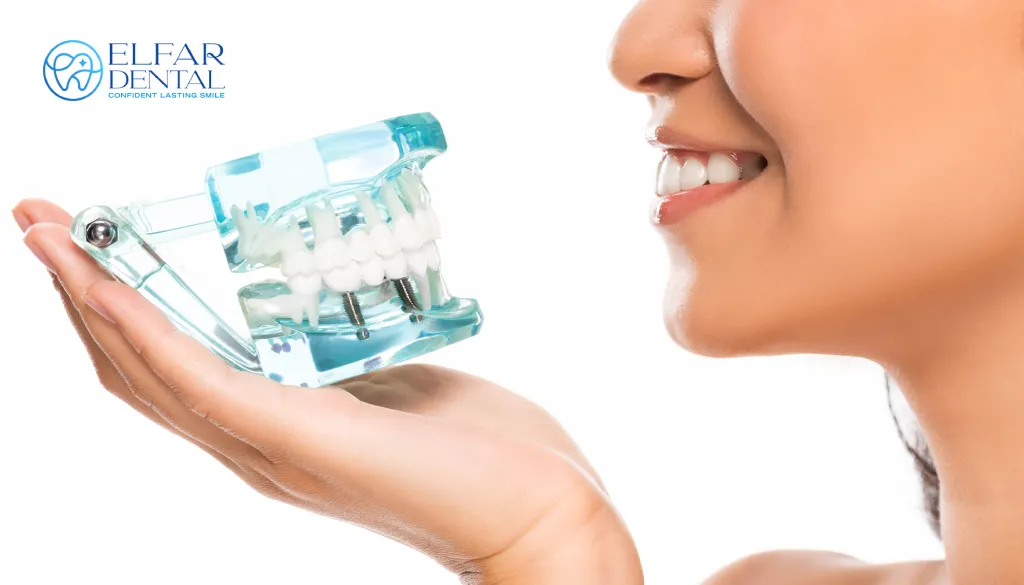
A dental implant is a small, biocompatible titanium post that is surgically placed into your jawbone to act as an artificial tooth root. Once integrated with your bone, it provides a stable foundation for a custom-made crown that looks, feels, and functions like a natural tooth.
A complete implant restoration has three components:
Component | Description |
The Implant | Titanium post placed into the jawbone |
The Abutment | Connector that attaches to the implant |
The Crown | Custom-made visible tooth (usually porcelain) |
The Australian Dental Association (ADA) recognises dental implants as a safe, effective, and long-lasting solution for replacing missing teeth.
Why Replace a Missing Tooth?
Before exploring your options, it’s important to understand why replacing a missing tooth matters. When a tooth is lost, your mouth begins to change almost immediately:
Consequence | What Happens |
Jawbone shrinkage | The bone that supported the tooth begins to deteriorate |
Teeth shift | Adjacent teeth tilt into the gap, causing bite problems |
Increased decay risk | Shifting teeth create hard-to-clean areas |
Facial changes | Bone loss can create a sunken appearance |
Difficulty chewing | Can affect nutrition and quality of life |
Replacing a missing tooth isn’t just about aesthetics—it’s about preserving your long-term oral health.
Benefits of Dental Implants
Dental implants offer several advantages over other tooth replacement options:
✅ Preserve Jawbone Health
Unlike bridges or dentures, implants stimulate the jawbone just like natural tooth roots, preventing bone loss and maintaining facial structure.
✅ Protect Healthy Teeth
Implants stand alone. Adjacent teeth are not ground down or altered—unlike with a traditional bridge.
✅ Natural Look and Feel
Implants are designed to match your natural teeth in colour, shape, and function. Most people won’t even know you have one.
✅ Long-Lasting Solution
With proper care, dental implants can last a lifetime. The crown may need replacement after 10-15 years, but the implant itself is designed for longevity.
✅ Improved Chewing and Speech
Unlike dentures, implants won’t slip or click. You can eat your favourite foods with confidence and speak clearly.
✅ Convenience
No adhesives, no soaking, no removal. Implants are cared for just like natural teeth—brushing, flossing, and regular check-ups.
Who Is a Candidate for Dental Implants?
Most adults in good general health are candidates for dental implants. Key factors include:
Factor | Consideration |
Adequate jawbone | Sufficient bone density to support the implant |
Healthy gums | No active gum disease |
Good general health | Conditions like uncontrolled diabetes may affect healing |
Non-smoker | Smoking can impair healing and implant success |
If you have experienced bone loss, a bone graft may be recommended to build up the jawbone before implant placement.
The only way to know for sure is with a comprehensive examination, including digital X-rays or a 3D cone beam CT scan.
The Dental Implant Procedure: Step by Step
The implant process is methodical and designed for success. Here’s what you can expect at Elfar Dental.
Step 1: Comprehensive Consultation and Planning
Your journey begins with a thorough examination, including digital X-rays and assessment of your oral health, bone structure, and personal goals. Your dentist will discuss your medical history and answer any questions.
Using advanced 3D imaging, we meticulously plan the implant placement—assessing bone density, locating nerves and sinuses, and digitally planning the surgery for safety and accuracy.
Step 2: Surgical Placement (Implant Day)
The implant is placed under local anaesthesia (with sedation options for anxious patients). A small incision is made in the gum, and the titanium post is gently inserted into the jawbone. The gum is then sutured.
Most patients report the procedure is less uncomfortable than a tooth extraction.
Step 3: Healing and Osseointegration
Over the next 3 to 6 months, your jawbone biologically fuses with the titanium post in a process called osseointegration. This creates an incredibly strong, lifelike foundation. A temporary tooth may be worn during this time.
Step 4: Abutment Placement
Once healing is complete, a minor procedure attaches the abutment to the implant. After your gum tissue heals around it, impressions are taken.
Step 5: Crown Placement
Your custom-made, permanent crown is attached to the abutment. Your dentist checks the fit, colour, and bite to ensure everything is perfect. Your smile is now fully restored.
Dental Implant Success Rates
Dental implants have an excellent success rate—over 96% at 10 years. With proper care, they can last a lifetime.
Factors that contribute to success include:
- Good oral hygiene
- Regular dental check-ups
- Non-smoking
- Healthy general health
Your dentist will discuss your individual prognosis based on your specific situation.

Dental Implants vs. Other Options
Feature | Dental Implant | Dental Bridge | Dentures |
Preserves jawbone | ✅ Yes | ❌ No | ❌ No |
Affects adjacent teeth | ❌ No | ✅ Grinds healthy teeth | ❌ No |
Removable | ❌ No | ❌ No | ✅ Yes |
Lifespan | Lifetime (crown 10-15 years) | 10-15 years | 7-10 years |
Stability | Like natural tooth | Fixed | Can shift |
Cost over time | Best long-term value | Moderate | May need multiple replacements |
The ADA notes that while implants have a higher upfront cost, their durability often makes them more economical over a lifetime.
Recovery and Aftercare
Immediately After Surgery
- Some swelling and minor discomfort are normal
- Use ice packs on the cheek (20 minutes on, 20 minutes off)
- Take prescribed or over-the-counter pain relief as directed
- Stick to soft foods for a few days
- Avoid using a straw (prevents dry socket)
- Do not smoke (impairs healing)
Long-Term Care
Dental implants require the same care as natural teeth:
- Brush twice daily
- Floss daily (special implant floss may be recommended)
- Regular dental check-ups every 6-12 months
- Professional cleanings to maintain gum health
With proper care, your implant can last a lifetime.
Frequently Asked Questions
Q: Is the implant procedure painful?
A: The procedure is performed under local anaesthesia, so you should feel no pain during surgery. Most patients report less discomfort than expected, managed well with over-the-counter medication.
Q: How long does the entire process take?
A: From consultation to final crown, the process typically takes 4-9 months, allowing time for osseointegration (bone healing).
Q: Are dental implants noticeable?
A: No. The crown is custom-made to match your natural teeth in colour, shape, and size. Most people won’t know you have an implant.
Q: Can implants fail?
A: Implant success rates are over 96%. Failure is rare and is often linked to poor oral hygiene, smoking, or uncontrolled medical conditions.
Q: Can I get implants if I have bone loss?
A: Possibly. A bone graft may be recommended to build up the jawbone before implant placement. Your dentist will assess your situation.
Q: Are dental implants covered by insurance?
A: Many private health funds cover a portion of implant treatment under Extras cover. Check with your insurer for details.
Making Dental Care Affordable
Private Health Insurance
If you have Extras cover, dental implant treatment may be partially covered. We process claims on the spot through HICAPS.
Payment Plans
Elfar Dental offers flexible payment options including Afterpay and Humm to help spread the cost of treatment.
Your Partner in Restorative Dentistry
At Elfar Dental, Dr. Mohamed Elfar and our team are committed to providing high-quality dental implant treatment in a calm, supportive environment. We take the time to explain the procedure, answer your questions, and ensure your comfort throughout.
Dr. Elfar brings extensive experience in restorative dentistry, with a patient-centred approach focused on clear communication and long-term outcomes. He is a member of the Australian Dental Association and is committed to continuing education to provide quality care.
Our team shares this commitment—ensuring every patient receives the information, support, and treatment they need to restore their smile.
Conclusion: Restore Your Smile with Confidence
Losing a tooth doesn’t mean losing your confident smile. Dental implants offer a permanent, natural-looking solution that preserves your oral health for years to come.
If you’re missing one or more teeth, don’t wait. The sooner you address the gap, the more treatment options you’ll have and the better the long-term outcome.
About Our Dental Practice

Book Your Implant Consultation Today
Schedule an appointment with Dr. Mohamed Elfar, General Dentist, Registration No. [DEN0000979762], at Elfar Dental in Belconnen.
Your Belconnen dentist. Discover more about our dental care services. Book a visit.
Ready to book your appointment?
📞 Call Our Family-Friendly Team at (02) 6251 9991
💻 Book online easily at Get Appointment
📍 Visit our modern clinic at 21 Benjamin Way, Suite 5F, Belconnen ACT 2617
Elfar Dental – Your partner for family dental care in Belconnen, Canberra, ACT.
Important Note:
This information is for educational purposes and should not replace professional dental advice. Always seek the advice of your dentist with any questions about your oral health. If you have severe dental phobia, speak with your dentist about appropriate management options.