
My Child Chipped Tooth! A Parent's Guide to Immediate Action and Long-Term Repair Options
The sound is unmistakable—a clink, a thud, a cry. You rush over to find your child holding their mouth, and your heart sinks as you see it: a chip in their beautiful front tooth. In that moment, a flood of questions hits: Is it an emergency? Will it hurt? Will it affect their adult tooth? What do I do right now?
First, take a deep breath. You are not alone. Chipped front teeth are one of the most common childhood dental injuries. At Elfar Dental, our family-friendly team is here to guide you through this, step by step. This guide will help you manage the immediate crisis with confidence and understand the long-term solutions to restore your child’s smile.
Step 1: Stay Calm & Assess – The First 5 Minutes Are Key
Your calmness will help calm your child. Gently have them rinse with water and let you look.
Assess the Severity:
Minor Chip: Only enamel is affected. The tooth might feel rough but isn’t sensitive.
Moderate Chip: Enamel and the yellowish dentin layer are exposed. The tooth may be sensitive to air, cold, or touch.
Severe Chip: The pink pulp (nerve) is visible or the tooth is loose. There may be bleeding from the tooth itself.
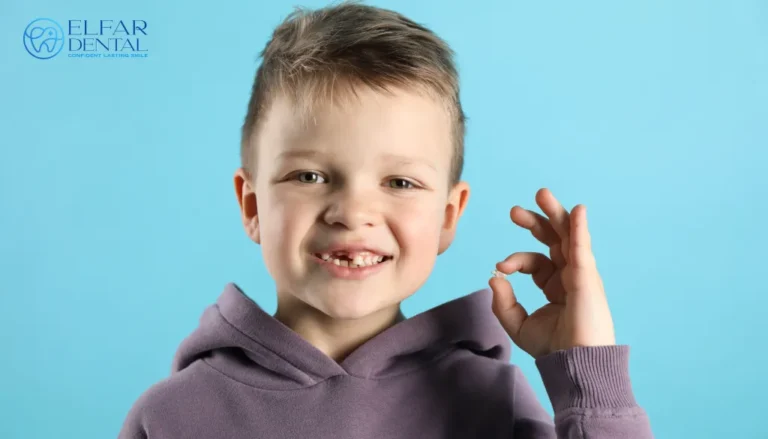
Locate the Tooth Fragment: If you can find it, place it in a cup of milk or saliva. Bring it to the dentist—in some cases, it can be bonded back on.
Step 2: Immediate First-Aid & Pain Management
Clean the Area: Rinse gently with cool water.
Control Bleeding: Apply gentle pressure with a clean gauze or cloth if the gum is bleeding.
Reduce Swelling: Use a cold compress on the cheek or lip outside the injured area for 10-minute intervals.
Pain Relief: For discomfort, use child-appropriate pain relievers like children’s paracetamol or ibuprofen as directed.
Diet: Stick to soft foods and avoid using the front teeth to bite.
Step 3: Call Your Dentist – Understanding the Urgency

Call Elfar Dental immediately. Describe what happened. We will determine if you need to be seen that day or can schedule an appointment within 24-48 hours.
Come in NOW (Emergency): If the tooth is very loose, knocked out, or the nerve is exposed (you see red or pink in the chip).
Come in within 24 hours (Urgent): If dentin is exposed (yellowish colour) or the chip is significant.
Schedule soon (Non-urgent): If it’s a tiny, smooth enamel-only chip with no sensitivity.
Step 4: At the Dental Visit – Diagnosis & Immediate Repair Options
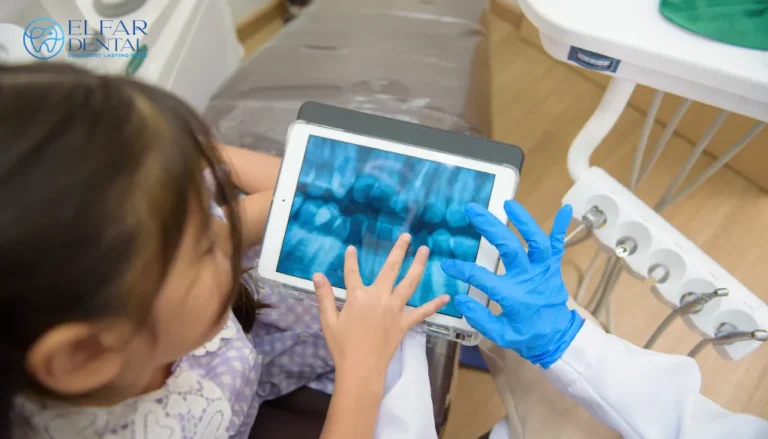
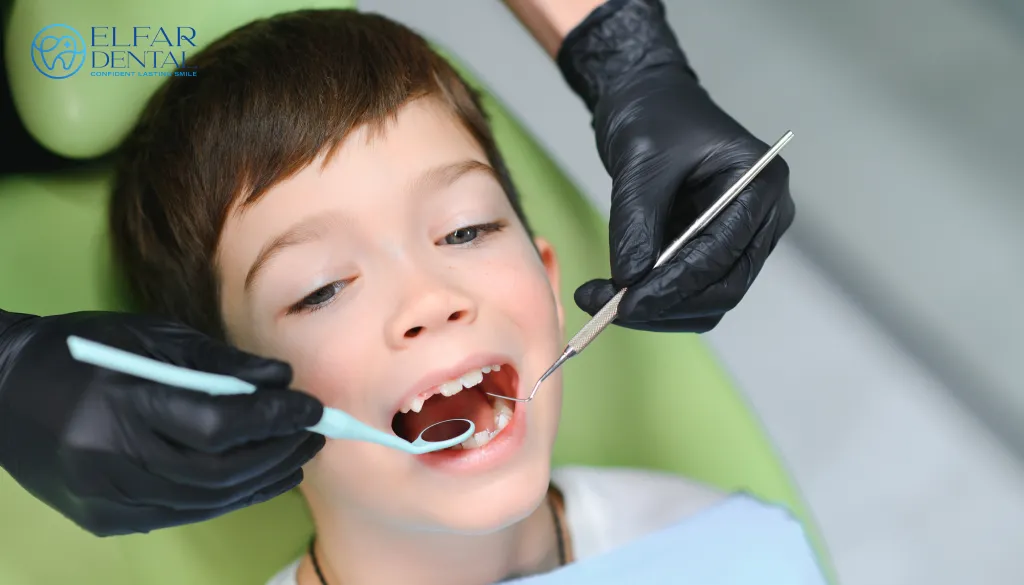
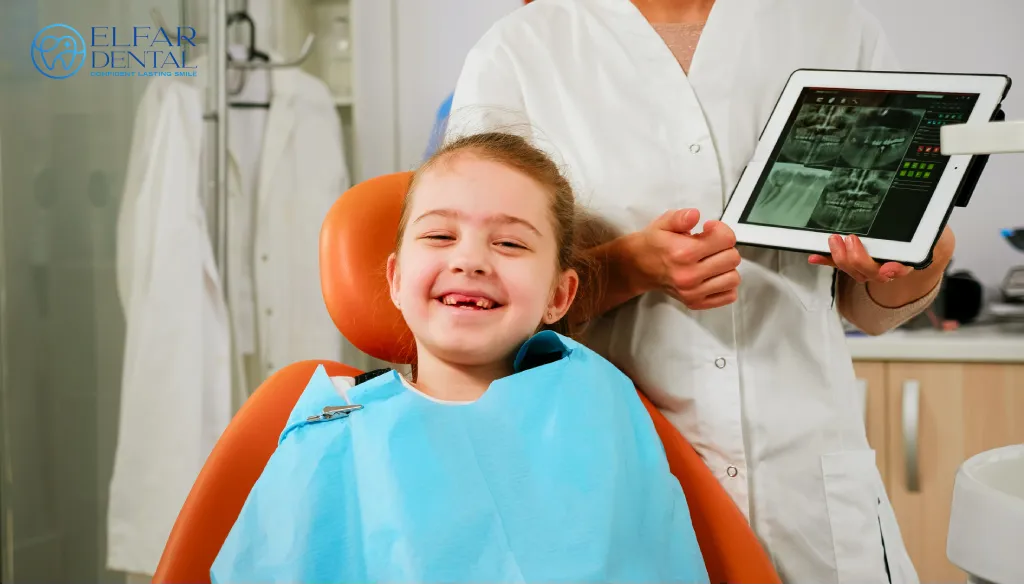
We will take a gentle X-ray to check the root and health of the adult tooth developing underneath. Then, we’ll discuss the best repair option based on the chip’s size, location, and your child’s age.
1. Cosmetic Contouring: For a tiny, smooth chip, we may simply gently round and polish the edge. Quick and painless.
2. Dental Bonding (Most Common Solution):
What it is: A tooth-coloured composite resin is applied, sculpted to match the natural tooth shape, and hardened with a special light.
Best for: Small to moderate chips. It’s conservative, strong, and can be completed in one visit. The material can be replaced as your child grows or if it wears.
3. Veneer (for larger chips in older children/teens): A thin, custom-made porcelain shell bonded to the front of the tooth for a larger restoration.
4. Pediatric Crown (for very large breaks): A pre-formed stainless steel or tooth-coloured crown that covers the entire tooth to protect it and restore function.
Step 5: Long-Term Considerations for a Baby Tooth vs. a Permanent Tooth
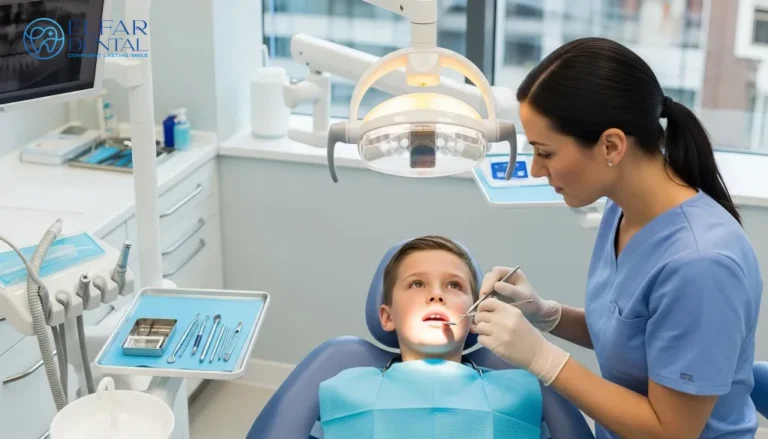
This is a critical distinction that affects our treatment philosophy.
If a BABY (Primary) Tooth is Chipped: Our primary goal is to manage pain, prevent infection, and maintain space for the adult tooth. We often choose the simplest, most durable option (like bonding) that will last until the tooth naturally falls out. We will monitor the health of the developing adult tooth underneath.
If a PERMANENT Tooth is Chipped: This is a long-term restoration. We aim for a solution that is aesthetic, functional, and durable through childhood and into adolescence. Bonding is an excellent first step. As your child gets older, the bond may be replaced or upgraded to a veneer for a more permanent adult solution.
Potential Long-Term Complications to Monitor
Even after a perfect repair, we keep an eye on:
Pulp Damage: The nerve can become damaged from the impact and die months later, sometimes requiring a root canal.
Infection: Signs include a pimple on the gum, darkening of the tooth, or persistent pain.
Adult Tooth Development: Trauma to a baby tooth can sometimes affect the colour or formation of the underlying permanent tooth. Regular check-ups are essential.
Prevention Tips for the Future
Mouthguards: A custom-fit mouthguard from your dentist is essential for any child in sports (even non-contact sports like skateboarding or gymnastics).
Childproofing: Use corner guards on furniture and secure rugs.
Diet Awareness: Be cautious with hard candies, ice, and crusty bread.
Conclusion: From Crisis to Confidence
A chipped tooth can feel like a big setback, but with prompt, skilled care, it is almost always a fully repairable event. At Elfar Dental, we specialise in turning these stressful moments into positive outcomes, ensuring your child’s smile—and your peace of mind—are fully restored.
We’re here to be your partner, providing gentle care today and a clear plan for your child’s dental future.
Don’t Navigate a Dental Injury Alone.
If your child has chipped a tooth, swift, expert care is the key to the best outcome.
Contact Elfar Dental immediately. Our family-friendly team is ready to provide calm, comfortable, and expert care to repair your child’s smile.
Your trusted Belconnen dentist. Discover why our community chooses us for gentle, effective dental care. Book a visit.
Ready to experience the Elfar Difference?
📞 Call Our Family-Friendly Team at (02) 6251 9991
💻 Book online easily at Get Appointment
📍 Visit our modern clinic at 21 Benjamin Way, Suite 5F, Belconnen ACT 2617
Elfar Dental – Your trusted partner for advanced family dental care in Belconnen, Canberra, ACT.